Havering Needs 54 Million Pounds It Does Not Have to Balance This Year's Books. Most of the Gap Is Children Who Need Extra Help at School.
Estimated reading time: 5 minutes
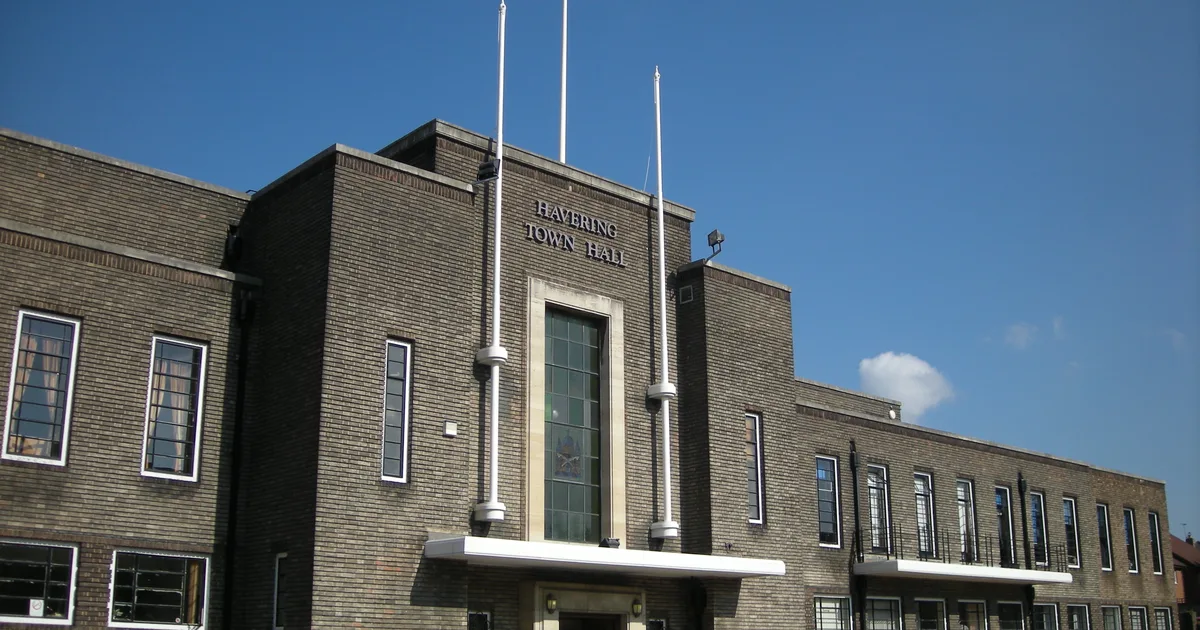

In short. Havering Council's Cabinet met on 16 September 2026 and considered its first financial monitoring report of the year, which forecasts that the council will need 54.2 million pounds of Exceptional Financial Support to balance its 2026/27 budget [1]. That is an improvement on the 77.0 million pound worst case the council had budgeted for in March [1]. The single largest driver has not improved: the High Needs Block of the Dedicated Schools Grant, which pays for children with special educational needs, is forecast to overspend by 45 million pounds this year, and the council expects the cumulative DSG deficit it is carrying to reach around 110 million pounds by 2027/28 [1]. Havering became the first council in London to come under Reform UK majority control after the borough's local elections on 7 May 2026, when the party took 39 of 55 seats [4].
A council chamber that flipped from no overall control to a 39-seat Reform UK majority in a single night is now reading out the bill it inherited. Havering's Cabinet, meeting on 16 September, considered the Quarter 1 Revenue and Capital Monitoring Report for 2026/27, the first of three financial updates it will receive over the year [1]. Cabinet Member for Finance Councillor Sue Benjamins told the meeting the figures had moved in the council's favour since March, but not far enough to avoid falling back on emergency support again. "This year we are going to have to, but much less than was originally envisaged, at 54.2 million pounds at present estimates," she said [3]. The report itself was not a decision item. It was submitted, in the committee's own words, for noting [1].
What Exceptional Financial Support actually does
Exceptional Financial Support is not a grant. It is government permission for a council in serious difficulty to use capital resources, including borrowing and the proceeds of asset sales, to meet everyday running costs it cannot otherwise afford, a step that would normally breach the legal requirement to balance a revenue budget [3]. Havering's own report traces the need to a mismatch between the government's funding formula, which it says is built on outdated metrics, and the borough's actual demographic and demand pressures, a mismatch the report says a revised formula for 2026/27 has not fully closed [1]. The council did not draw on EFS at all in the previous financial year [3].
The improvement Benjamins described is real and is in the council's own numbers. The budget approved in March 2026 included a worst-case EFS provision of 77.0 million pounds, made up of 65.9 million pounds of anticipated support plus an 11.1 million pound contingency for further deterioration [1]. By the end of June, the council was forecasting an underspend of 22.8 million pounds against that worst case, driven mainly by the benefit of a better-than-expected outturn in the previous financial year and the assumption that the 11.1 million pound contingency will not be needed [1]. Net that off against the 77.0 million pound worst case and the figure lands at 54.2 million pounds, the number Benjamins gave the chamber [1].
Where most of the money is actually going
The improvement sits mainly in corporate and central budgets, which the report shows running 18.8 million pounds below forecast [1]. Set against that, the council's People directorate, which covers adult social care and children's services, is forecasting a 6.3 million pound overspend against its own budget, which the report attributes to demand and demographic pressures that do not respond to the same controls as discretionary spending [1].
The starkest number in the report sits outside that headline total altogether. Dedicated Schools Grant funding is ring-fenced and accounted for separately from the council's general budget, but the deficit still has to be managed, and the report is explicit that the High Needs Block, which funds support for children and young people with special educational needs, is forecast to overspend by 45 million pounds this year [1]. The report describes that overspend as reflective of rising demand that the current national funding formula does not cover, for Havering or other councils [1]. The cumulative DSG deficit the council expects to be carrying forward into 2027/28 is put at around 110 million pounds [1]. Cabinet was told separately that government funding is expected to cover 90 per cent of the additional in-year pressure, though the report does not say what covers the remainder or how the accumulated deficit itself gets repaid [3].
Schools themselves are under the same pressure from a different direction. Of Havering's schools, 17 are currently in budget deficit; eight of those have a formal licensed deficit agreed with the council, and the remaining nine are still working on recovery plans [1].
A budget written by the administration before this one
The report contains a line easy to read past and difficult to ignore once noticed. Havering's 2026/27 budget, the one this monitoring report measures the council against, was approved in March 2026, two months before the 7 May local elections that gave Reform UK its 39 seats and unseated the Havering Residents Association administration that had governed without overall control [1] [4] [5]. The report says as much directly: the budget "reflects the priorities of the administration at the time" and "has not yet been updated to reflect the new priorities and initiatives" of the current administration's own hundred-day plan, an update the report says will happen alongside the council's medium-term financial strategy and its preparations for the 2027/28 budget [1]. Benjamins and the rest of Reform UK's Cabinet are, for now, the ones presenting figures against a budget somebody else set.
What happens next
The council's reserves give it some room, though not an unlimited amount. Havering held 20.2 million pounds of General Balances at the start of the year and has budgeted to build that to 25.2 million pounds by year end, still short of the roughly 28 million pound cushion, about 10 per cent of net spend excluding EFS, that the council says it wants to hold in the medium term against future risk [1].
Two days before Cabinet met, the government gave the council some help on the specific pressures driving the 54.2 million pound figure. The Ministry of Housing, Communities and Local Government announced additional funding, 6.75 million pounds for Havering specifically, aimed at councils already receiving Exceptional Financial Support and intended to help them change how they deliver high-cost services rather than simply cover the gap [6]. Council Leader Keith Prince welcomed it while making clear it was not close to resolving the underlying gap, and used the moment to set out, in his own words, where he puts the blame. "For some time, we have warned Government that Havering's financial position is largely not the result of bad financial management, waste or reckless investments. It is being driven by year-on-year chronic underfunding, rising costs and rapidly increasing demand for the services we are legally required to provide," he said, naming adult social care, children's social care and housing among them [6]. He went further on the council's own recent past: "we also know that the previous HRA Administration delayed or did not make the right financial decisions in some circumstances, which we are now addressing," he said, a direct assessment of his predecessors that is his own claim rather than a finding of this site's [6]. He added that the council would "continue to lobby ministers and officials for adequate funding to solve our budget gap and managing our social care and Temporary Accommodation pressures" [6]. Two more monitoring reports are due to reach Cabinet before the financial year is out, each one a fresh chance to find out whether 54.2 million pounds was the final word or just where the number happened to sit in September.
Sources
- London Borough of Havering, Cabinet, "1st Quarter Revenue and Capital Monitoring Report 2026/27", report for the meeting of 16 September 2026. https://democracy.havering.gov.uk/documents/s85579/10.0%20P3%2026-27%20Budget%20Monitoring%20Q1%20Cabinet%20report%20-%20Final%20week%20DRAFT%20-%20post%20agenda%20clearing%20-%20Copy.pdf
- London Borough of Havering, agenda and decisions for the Cabinet meeting of 16 September 2026. https://democracy.havering.gov.uk/ieListDocuments.aspx?CId=153&MId=8358&Ver=4
- The Havering Daily, "Havering Council Forecasts £54.2m Use Of Exceptional Financial Support", 20 September 2026. https://thehaveringdaily.co.uk/2026/09/20/havering-council-forecasts-54-2m-use-of-exceptional-financial-support/
- Romford Recorder (Newsquest Media Group), "Havering local election result - Reform takes control", 8 May 2026. https://www.romfordrecorder.co.uk/news/26084558.havering-local-election--reform-takes-control-council/
- London Borough of Havering, current councillors by political party. https://democracy.havering.gov.uk/mgMemberIndex.aspx
- London Borough of Havering, "Leader of Havering Council responds to Government's announcement of additional £6.75million funding for Havering", 18 September 2026. https://www.havering.gov.uk/news/article/1824/leader-of-havering-council-responds-to-government-s-announcement-of-additional-6-75million-funding-for-havering