Wandsworth Boasted the Lowest Council Tax in Britain. Eight Months Later Its Cabinet Approved a Plan to Raise It by 94 Percent.
Estimated reading time: 6 minutes
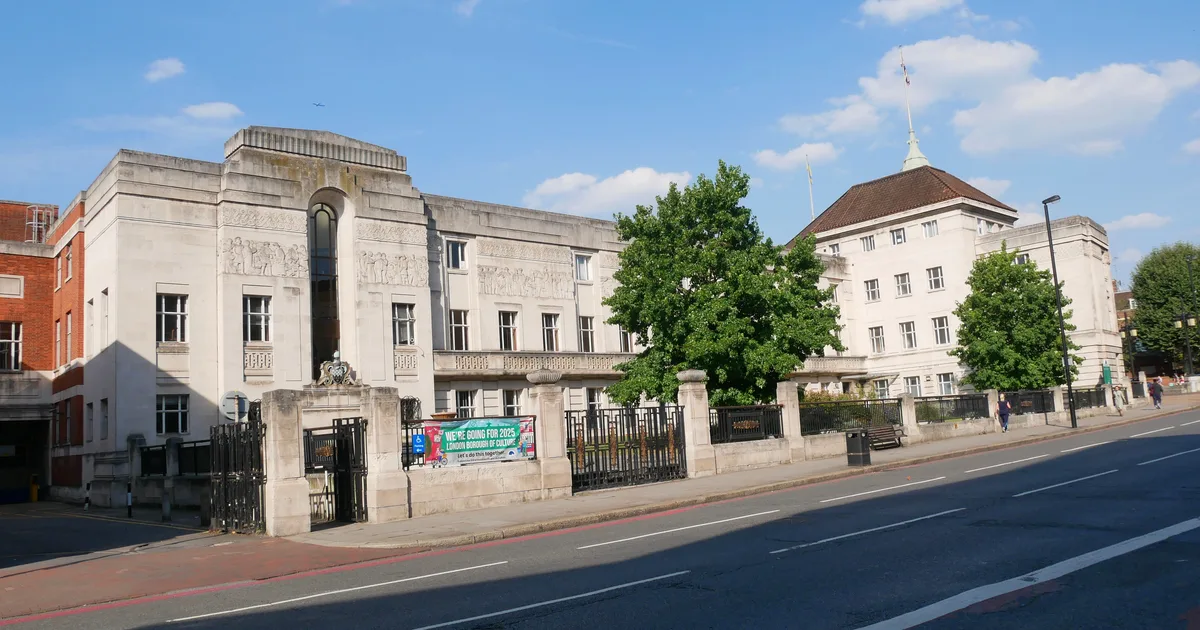

In short. A Medium Term Financial Strategy approved by Wandsworth's cabinet on 12 October 2026 plans for the council's own share of a Band D council tax bill to rise from £510 to £1,468 in 2027/28, taking the total bill including the Greater London Authority precept from £1,020 to around £1,978, a 94 percent increase [1]. The council's own report says a new government funding formula confirms a 40 percent cut in its general grant, the largest loss of any council in the country, and states plainly that this reflects the fact that Wandsworth has historically kept council tax low [1]. Eight months earlier, a cabinet under different political control had frozen the same charge for a fourth consecutive year [3]. The final decision on the actual rate will be taken by Full Council in March 2027 [1].
On 24 February 2026, Wandsworth's cabinet froze the main element of council tax for the fourth year running. Leader Simon Hogg said the borough's low debt and high reserves meant it could "keep more money in your pocket", and the council's own announcement said residents would continue to pay the lowest council tax in the country [3]. That cabinet was Labour-led. In May, Wandsworth's local elections produced a Conservative minority administration, and on 12 October its cabinet, now led by Robert Morritt, approved a financial strategy that plans for the same charge to rise by 94 percent within fourteen months of that freeze [1].
What the report says, in its own figures
The document is Wandsworth's Medium Term Financial Strategy 2026/27, Paper No. 26-237, written by the council's Executive Director of Finance for the cabinet meeting of 12 October 2026 [1]. It records that the Final Local Government Finance Settlement, published in February 2026, confirmed "a severe funding loss for Wandsworth with a 40% cut in general grant funding, the largest loss in the country", even as national core spending power rose by 5.7 percent overall [1]. In cash terms the report puts the loss of core government funding at £84m a year by 2029/30 [1].
The report does not frame this as a quirk of timing. It states that Wandsworth was one of five London boroughs, plus one unitary authority, protected only by a 95 percent funding guarantee rather than full protection, "because these authorities have low council tax and received grant funding more than 15 percent above assessed need under the new formulae" [1]. In other words, the council's own paper trail says the formula change targets Wandsworth's position as a traditionally low-tax borough directly, not as a side effect.
Against that gap, the report sets out what it calls a planning assumption: that Wandsworth's share of a Band D bill needs to rise from £510 to £1,468 in 2027/28, with no further rise in the following three years [1]. Including the Greater London Authority's precept, the total bill would reach around £1,978, an increase of £958, or 94 percent, on the current £1,020 [1]. The report notes that even at that level, Wandsworth's bill would remain "considerably lower than the current year national average charge of £2,392" [1].
The report is explicit that smaller, repeated rises would not work instead. It states that "council tax increases of 5% each year over the MTFS period would not close the structural budget gap and would exhaust the Council's reserves fully within two years" [1]. Reserves have already fallen from £205m in 2023 to £162m at the start of this financial year, and are projected to drop below £100m by April, before settling at around £76m over the following four years under the plan now approved, which the report calls the minimum needed to retain financial resilience [1].
Why no referendum is required
A rise of this size would normally trigger a local referendum under the standard council tax rules. It will not, because Wandsworth is one of six authorities named in a written ministerial statement on the provisional Local Government Finance Settlement, delivered by Alison McGovern, then Minister of State for Housing, Communities and Local Government, on 17 December 2025 [2]. The statement sets out that referendum principles will not be set for the City of London, Hammersmith and Fulham, Kensington and Chelsea, Wandsworth, Westminster and Windsor and Maidenhead for 2027/28 and 2028/29 [2]. The government's stated reasoning is that these six authorities "are all upper tier, will receive 95% income protection and have the lowest council tax levels of any upper tier authority in the country", with Band D taxpayers there paying between £450 and £1,280 less than the England average this year, and that "by choosing not to subsidise very low bills for the 500,000 households in these places, we will provide £250 million more funding for public services in places with higher need" [2].
This site reported in October on the first of those six councils to put a figure on what the flexibility means in practice, when Hammersmith and Fulham's cabinet set out scenarios for a rise of up to 150 percent in its own share of the bill [4]. Wandsworth's 94 percent is the second specific figure to emerge from the same six-council group, and the first to come with an actual cabinet decision behind it rather than a set of options still open for Cabinet to choose between.
What was and was not decided on 12 October
Cabinet's recommendation was to approve the Medium Term Financial Strategy itself, not to fix a council tax rate [1]. The report is explicit that "the final legal decision on council tax will be taken by Full Council in March 2027 as part of the annual budget setting process", and that the planning assumption will keep being tested against savings delivery, demand and government funding before any final figure is put to a vote [1]. A local news outlet covering the meeting, Putney.news, reported that cabinet did approve the strategy as recommended, alongside separate decisions to close the Access for All concessionary scheme, introduce a charge for bulky waste collections and suspend the Wandsworth Grants Fund for four years [5].
The report pairs the headline figure with a widened Council Tax Reduction Scheme, under which more than 15,000 households, around 10 percent of the borough, are expected to receive support, at a forecast cost rising from £11.1m to £16.2m by 2030/31 [1].
The politics the figures sit inside
Leader Robert Morritt's administration has been explicit about where it places responsibility. In a council statement published on 15 September 2026, before the strategy went to cabinet, Morritt said: "No one wants to raise Council Tax in this way. But we will be fighting this Labour Government every step of the way" [6]. That statement blames the national government's funding settlement for the gap, a claim the MTFS report's own figures on the 95 percent protection threshold and the 40 percent grant cut broadly support [1].
What the council's own report does not attribute to the current government, in the same passage, is the other half of the mechanism: that the formula singles out Wandsworth partly because of a council tax level that successive administrations, Labour included, chose to keep low for years, most recently as a stated policy as late as February 2026 [1] [3]. Both of those things, the government's deliberate policy choice and the borough's own long-run tax position, sit in the same document without the report drawing the second one out as a cause the council had any hand in.
Residents facing the bill will get the final say only at the ballot box, not at a referendum: the government has made sure of that until at least 2029. Full Council's actual vote in March 2027 is the only point in this process where elected members, rather than a planning assumption in a cabinet paper, will put a number to what households in one of England's traditionally cheapest boroughs are now going to pay.
Sources
- Wandsworth Borough Council, Cabinet, "Medium Term Financial Strategy 2026/27", Paper No. 26-237, report for the meeting of 12 October 2026. https://democracy.wandsworth.gov.uk/documents/s130037/MTFS%20Paper%20No.%2026-237.pdf
- Alison McGovern, then Minister of State for Housing, Communities and Local Government, "Provisional Local Government Finance Settlement 2026-27", Written Ministerial Statement HCWS1202, 17 December 2025, Hansard, via TheyWorkForYou. https://www.theyworkforyou.com/wms/?id=2025-12-17.hcws1202.h
- Wandsworth Borough Council, "Cabinet agrees Council Tax freeze", news release, 24 February 2026. https://www.wandsworth.gov.uk/news/news-february-2026/cabinet-agrees-council-tax-freeze
- Civic Scrutiny, "Hammersmith and Fulham Could Raise Its Council Tax by 150 Percent. A Government Formula, Not the Council, Opened That Gap.", 6 October 2026. https://www.civic-scrutiny.co.uk/2026-updates/hammersmith-fulham-council-tax-150-percent-rise.html
- Putney.news, "Wandsworth's cabinet passes plan to double council tax", 13 October 2026. https://putney.news/2026/10/13/wandsworths-cabinet-passes-plan-to-double-council-tax/
- Wandsworth Borough Council, "Council tax will need to rise unless Government thinks again", news release, 15 September 2026. https://www.wandsworth.gov.uk/news/news-september-2026/council-tax-will-need-to-rise-unless-government-thinks-again/