The Ombudsman Found Nottinghamshire County Council at Fault in Seven SEND Cases Since March. The Council's Own Report Calls That a Failure Rate of 0.1 Percent.
Estimated reading time: 6 minutes
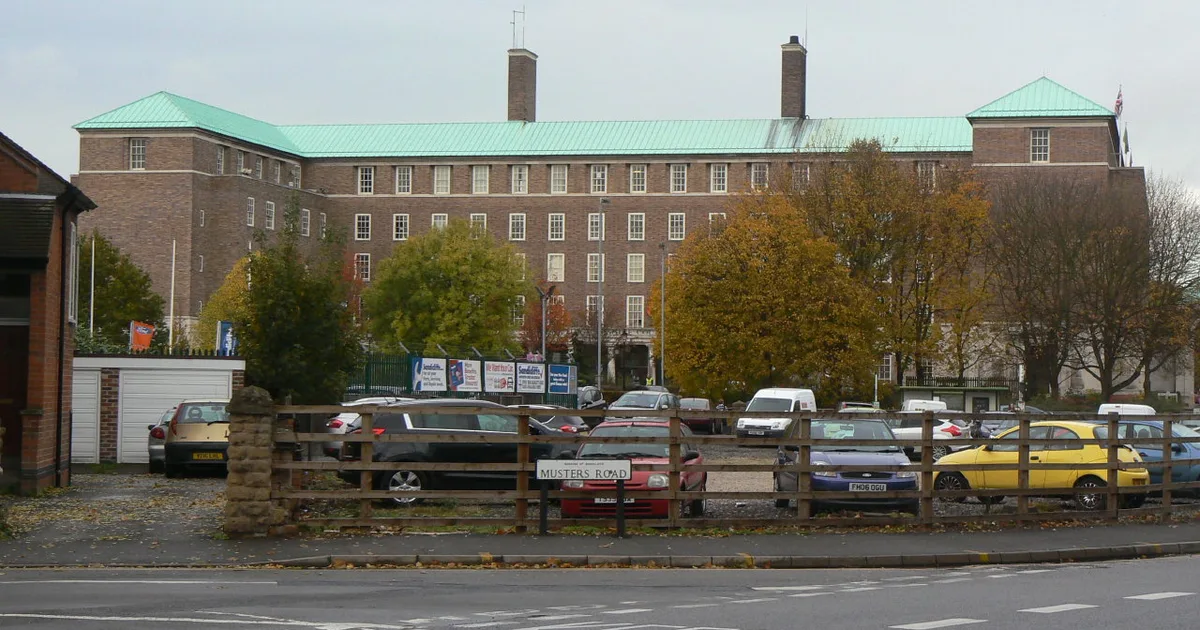

In short. A report by the council's Service Director for People and Governance, going to the Audit and Governance Committee on 14 October 2026, records that the Local Government and Social Care Ombudsman decided 45 cases involving Nottinghamshire County Council between March and September 2026, investigated 16 in full, and found fault in 13 [1]. Nine of the upheld cases were in children's services; seven of those concerned support for children with special educational needs and disabilities [1]. The report describes missed special-school placements, cancelled physiotherapy, occupational therapy and communication aids, and two cases in which a child went without meaningful education for weeks [1]. It also tells members that the number of children with an Education, Health and Care Plan in Nottinghamshire has risen 27 percent in a year, and frames the seven findings as 0.1 percent of that caseload [1].
Nottinghamshire County Council told its own Audit and Governance Committee that it manages 608 complaints a year and that fewer than 8 percent of them ever reach the Ombudsman [1]. That framing, in a report dated for the committee's 14 October meeting, comes directly above a table of the cases where the Ombudsman did look, and did find something wrong: thirteen findings of fault since March, more than half of them involving children with special educational needs [1].
What the seven SEND cases found
The report groups the seven upheld SEND complaints together rather than setting each out as a separate decision, but it is specific about the pattern running through them. The most common faults, it says, were failures to secure the provision written into a child's Education, Health and Care Plan, delays in the EHC Plan process itself, and problems arranging alternative education when a child could not attend school [1]. Within that, the report lists missed special-school placements and provision that was agreed on paper but never delivered: physiotherapy, occupational therapy, music therapy and communication aids [1].
In two of the seven cases, the report records, a child went through a significant period with little or no education at all, because no suitable alternative provision was arranged after a placement broke down or after a prolonged absence from school [1]. One family had an amended EHC Plan issued late, after an annual review was delayed and post-16 transition planning moved slowly; the report says the Ombudsman also pointed to weak record-keeping, noting that undocumented decisions had contributed to families' distress and loss of confidence on top of the practical impact of the missed support [1].
One case set out in full. The report describes a single SEND complaint in more detail than the rest: a child unable to attend school because of anxiety, whose mother argued the placement was unsuitable and that alternative provision should have started sooner. The Ombudsman found no fault in how the council handled the case between January and June 2025, when it was working with the school and weighing medical evidence toward getting the child back into the classroom. It then found fault in what came next: a delay of several weeks in arranging alternative education from June 2025, and a failure to properly consider increasing the five hours a week of home-based teaching already in place once the new school year started in September 2025 [1]. The council apologised and paid 750 pounds for the lost education and the resulting distress [1].
What it cost, and who is paying
Across the seven SEND cases, the report says financial remedies ranged from 300 pounds to 4,800 pounds, totalling 11,350 pounds [1]. Two further children's cases outside the SEND group, one over a wrongly-handled complaints process and one over the delayed alternative-education case set out above, added 950 pounds between them, bringing the children's services total to 12,300 pounds, to be met from the Children and Families budget [1]. A separate 1,300 pounds covers four unrelated adult social care findings, charged to the Adults budget [1]. Beyond the payments, the council was required to apologise in each case, review its procedures, strengthen oversight of EHC provision, and improve how annual reviews and post-16 planning are recorded [1].
The council's own context, in its own report
The report does not simply list the seven findings; it argues against reading too much into them. Nottinghamshire now has just under 7,000 EHC Plans in place, 166 more than a year earlier, a rise of 27 percent, and the report says the Ombudsman's seven fault findings amount to 0.1 percent of the children and young people the council works with [1]. It points to a redesign of the statutory SEND service launched in January 2026 and a wider SEND Reform Plan, and notes that the seven cases examined by the Ombudsman predate the redesign, given how long an investigation takes to complete [1]. Set against the 0.1 percent figure, the same report's own detail cuts the other way: two children with little or no education for weeks, special-school places that did not materialise, and therapy that was agreed on paper and never arrived are not the kind of fault that scales down neatly because the overall caseload is growing.
West Bridgford Wire reported the substance of the committee report a week before the meeting, under the headline "Seven SEND cases among 13 Ombudsman fault findings against Nottinghamshire council", but did not link to the report itself [2]. The council's committee pages do not surface a direct link to individual meeting documents from a search engine or a dated URL; this site located the report by working through the council's own meetings list for the Audit and Governance Committee to the 14 October entry and opening the agenda for item 9 [1].
The Ombudsman's decisions themselves are anonymised and published on its own website, searchable by council name, but the committee report does not give the individual case references needed to find them there [1]. What is on the public record, in the council's own words, is the pattern: seven children with special educational needs, let down in seven different ways, inside a service the council itself says is both growing fast and being redesigned. Members due to discuss the report on 14 October are being asked only to note it.
Sources
- Nottinghamshire County Council, report to Audit and Governance Committee, "Local Government and Social Care Ombudsman Decisions March 2026 to September 2026", agenda item 9, 14 October 2026. https://www.nottinghamshire.gov.uk/DMS/Document.ashx?czJKcaeAi5tUFL1DTL2UE4zNRBcoShgo=FR3cFviILxIVvR49J2%2fpZ46LBzQEdZTfTmCUAm%2bELqhtlrg9vEAjHg%3d%3d&rUzwRPf%2bZ3zd4E7Ikn8Lyw%3d%3d=pwRE6AGJFLDNlh225F5QMaQWCtPHwdhUfCZ%2fLUQzgA2uL5jNRG4jdQ%3d%3d&mCTIbCubSFfXsDGW9IXnlg%3d%3d=hFflUdN3100%3d&kCx1AnS9%2fpWZQ40DXFvdEw%3d%3d=hFflUdN3100%3d&uJovDxwdjMPoYv%2bAJvYtyA%3d%3d=ctNJFf55vVA%3d&FgPlIEJYlotS%2bYGoBi5olA%3d%3d=NHdURQburHA%3d&d9Qjj0ag1Pd993jsyOJqFvmyB7X0CSQK=ctNJFf55vVA%3d&WGewmoAfeNR9xqBux0r1Q8Za60lavYmz=ctNJFf55vVA%3d&WGewmoAfeNQ16B2MHuCpMRKZMwaG1PaO=ctNJFf55vVA%3d
- West Bridgford Wire, "Seven SEND cases among 13 Ombudsman fault findings against Nottinghamshire council", 7 October 2026. https://westbridgfordwire.com/seven-send-cases-among-13-ombudsman-fault-findings-against-nottinghamshire-council/