A Council Left 500 Police Safeguarding Alerts Sitting Unread. The Ombudsman Chose That Case as One of Only Three Worth Naming This Year.
Estimated reading time: 7 minutes

In short. The Local Government and Social Care Ombudsman published its Annual Review of Adult Social Care Complaints 2025-26 on 24 September 2026: 3,938 complaints and enquiries, up 22 per cent on the year before, of which 904 were investigated and 77 per cent upheld [1]. Councils and care providers complied with its recommendations in 99.8 per cent of cases [1]. Out of everything it looked at, the Ombudsman issued full investigation reports about only three councils this year: Haringey, where a safeguarding referral about a vulnerable man sat behind more than 500 unread police reports [2], Hackney, whose Blue Badge scoring guidance broke the government's own rules [3], and West Sussex, which applied a blanket transport rule with no room to look at an individual family's circumstances [4]. This piece reads the annual review's own numbers against all three decisions in full.
Most people who complain to the Local Government and Social Care Ombudsman never make the news. Of the 3,938 complaints and enquiries it received about adult social care in 2025-26, 1,177 were turned away as not ready or not for it to handle, 1,100 were assessed and closed without a full investigation, and 904 went to investigation, of which 698 were upheld [1]. Complaints from people who fund their own care rose 10 per cent, which the Ombudsman reads as welcome evidence that more of them know they have a right to complain at all, while noting the number remains low against how many self-funders there are [1]. "Behind every one of these numbers is a person, a family or a carer trying to get things back on track after something has gone wrong," Ombudsman Amerdeep Clarke wrote in the report's foreword [1].
Most of that casework stays as a routine, published decision: a reference number, an anonymised complainant, a finding, a remedy. The report itself explains what elevates a handful of cases above that routine: "Cases that raise serious issues or highlight matters of public interest are highlighted via our press releases, and cases about councils are issued as investigation reports" [1]. This year there were three: Haringey, Hackney and West Sussex [1]. Reading the underlying decisions, not just the report's own summary of them, is where the detail the summary leaves out sits.
Haringey: an inbox with more than 500 police reports in it
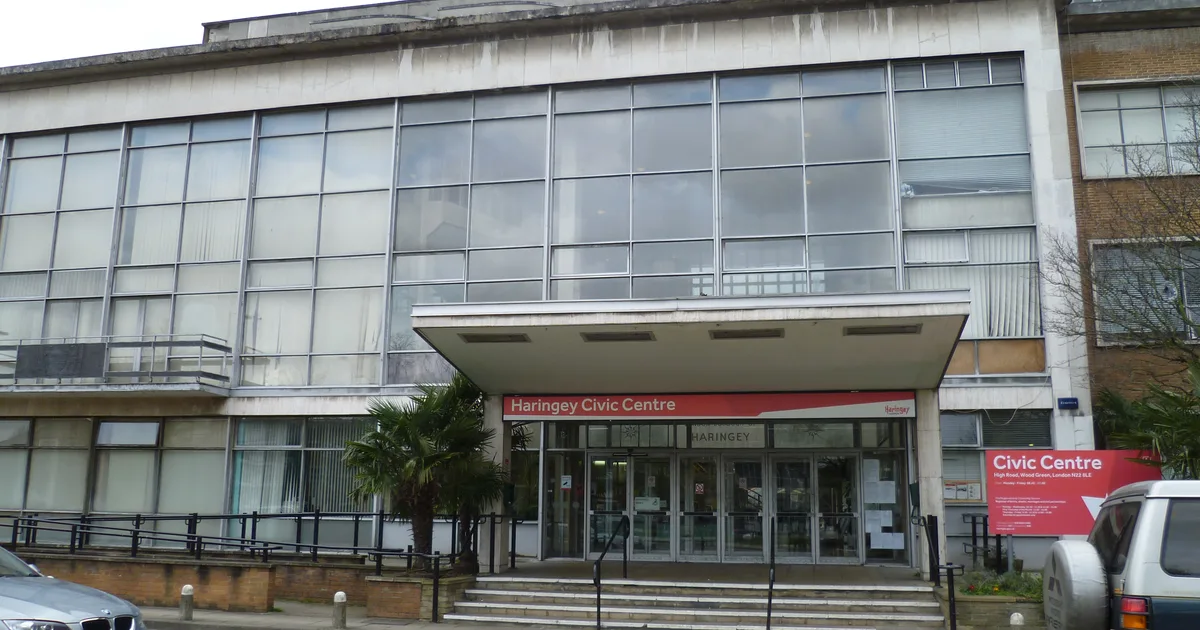
The Ombudsman's investigation began with a narrower complaint: a woman, referred to in the decision as Ms X, said Haringey Council had not acted quickly enough after she raised concerns about the welfare of her friend, referred to as Mr Y [2]. Mr Y later had a fall during a seizure that left him with a life-changing injury, in the year before which Ms X and emergency services had both alerted the council to concerns about his health and vulnerability, including a risk of homelessness [2]. While looking into that complaint, the Ombudsman's enquiries surfaced something well beyond it: the council's social work inbox held more than 1,100 unread emails, over 500 of them police reports [2].
The Ombudsman's decision records that the council had not evidenced any consideration of whether it needed to act to safeguard Mr Y, leaving him at risk of harm, and that its complaint handling was separately poor enough to cause Ms X frustration in its own right [2]. Local Government and Social Care Ombudsman Chief Executive Julie Odams put it more plainly in the press release that followed: "Because of the council's inertia, the man at the centre of this case was left at risk of significant harm" [5]. The decision, dated 19 August 2025, required the council to apologise, pay Mr Y 2,000 pounds and Ms X 200 pounds, run a lessons-learned exercise, retrain staff on accepting safeguarding referrals regardless of format, and report back on its progress clearing the backlog in emails and police reports [2]. Haringey accepted the recommendations, and the Ombudsman recorded itself satisfied with the council's response on 1 December 2025 [2].
Hackney: a Blue Badge rule that made qualifying harder than the government intended
Hackney's case started with a single renewal. A woman referred to as Mrs D had her Blue Badge renewal refused after an assessment at the council's own assessment centre, despite supplying letters of support from her GP and physiotherapist, details of the medication she took for pain and the home adaptations she needed [3]. The Ombudsman's investigation found fault in the supplementary scoring guidance the council gave staff running those assessments: it required applicants to show multiple qualifying "factors" to score enough points for a badge, a bar the decision found was contrary to the government's own guidance on how the scheme should work [3].
The decision does not stay narrowly about Mrs D. Because the guidance itself was wrong, the Ombudsman concluded it was likely that other Hackney residents had also been wrongly refused a badge they would have qualified for under correct rules, and it told the council to write to everyone refused a badge at its assessment centre since 1 January 2024, inviting them to reapply once the guidance was fixed [3]. Hackney initially accepted only part of the findings, and the decision records the Ombudsman's own view that the apology offered and the changes proposed did not go far enough on first response [3]. The council was required to take the report to full council, cabinet or an equivalent committee of elected members, and the Ombudsman recorded itself satisfied with Hackney's eventual response on 21 August 2025 [3].
West Sussex: a policy with no exceptions built in
The third case turned on a rule rather than a single decision. West Sussex County Council had stopped funding transport to a day centre for a young man, referred to as Mr D, once his family acquired a Motability vehicle, applying what the decision describes as a blanket direction that transport would not be funded wherever a Motability car was in the household [4]. His mother, Mrs C, said the change left her and her husband finding money neither they nor Mr D could readily meet [4]. The Ombudsman's investigation found the policy at fault for exactly that reason: it left the council no flexibility to weigh an individual family's actual circumstances before withdrawing support [4].
The decision, dated 17 September 2025, required an apology, a 250 pound payment to Mrs C, a review of Mr D's needs and access to day care, and a notice at affected day centres inviting anyone who thought they had been treated the same way to come forward for reassessment [4]. Unlike Hackney, West Sussex accepted the recommendations in full at first response, and the Ombudsman recorded itself satisfied on 8 January 2026 [4].
What the 99.8 per cent compliance figure does not show
The headline compliance rate in the annual review, 99.8 per cent, is real and the report is right to treat it as evidence of a broadly functioning system: councils and care providers overwhelmingly do what the Ombudsman asks once it has ruled [1]. But it measures whether an organisation eventually complies, not how it behaved on first contact with a finding against it. Hackney's own decision shows a council whose first offer the Ombudsman itself judged inadequate, needing a second round before compliance was recorded [3]. West Sussex, by contrast, accepted its findings straight away [4]. Both count identically in the 99.8 per cent.
None of these three cases would have reached a reader without the Ombudsman choosing, out of 904 investigations, to write them up as full reports rather than leave them as anonymised decisions in a database. That is a small number to carry the weight of showing what a bad year in adult social care complaint handling actually looks like. It is also, this year, the only part of the picture with names attached.
Sources
- Local Government and Social Care Ombudsman, "Annual Review of Adult Social Care Complaints 2025-26", September 2026. https://www.lgo.org.uk/assets/attach/7022/ASC-Review-2025-26-FINAL.pdf
- Local Government and Social Care Ombudsman, decision on complaint against London Borough of Haringey (24 014 203), decision date 19 August 2025. https://www.lgo.org.uk/decisions/adult-care-services/safeguarding/24-014-203
- Local Government and Social Care Ombudsman, decision on complaint against London Borough of Hackney (24 003 887), decision date 3 April 2025. https://www.lgo.org.uk/decisions/adult-care-services/transport/24-003-887
- Local Government and Social Care Ombudsman, decision on complaint against West Sussex County Council (24 009 730), decision date 17 September 2025. https://www.lgo.org.uk/decisions/adult-care-services/transport/24-009-730
- Local Government and Social Care Ombudsman, "Ombudsman reveals huge safeguarding backlog at London council", October 2025. https://www.lgo.org.uk/information-centre/news/2025/oct/ombudsman-reveals-huge-safeguarding-backlog-at-london-council