Nine Councils Lost the Right to Decide Their Own Planning Applications on the Same Day. Only One Has Taken the Government to Court.
Estimated reading time: 5 minutes
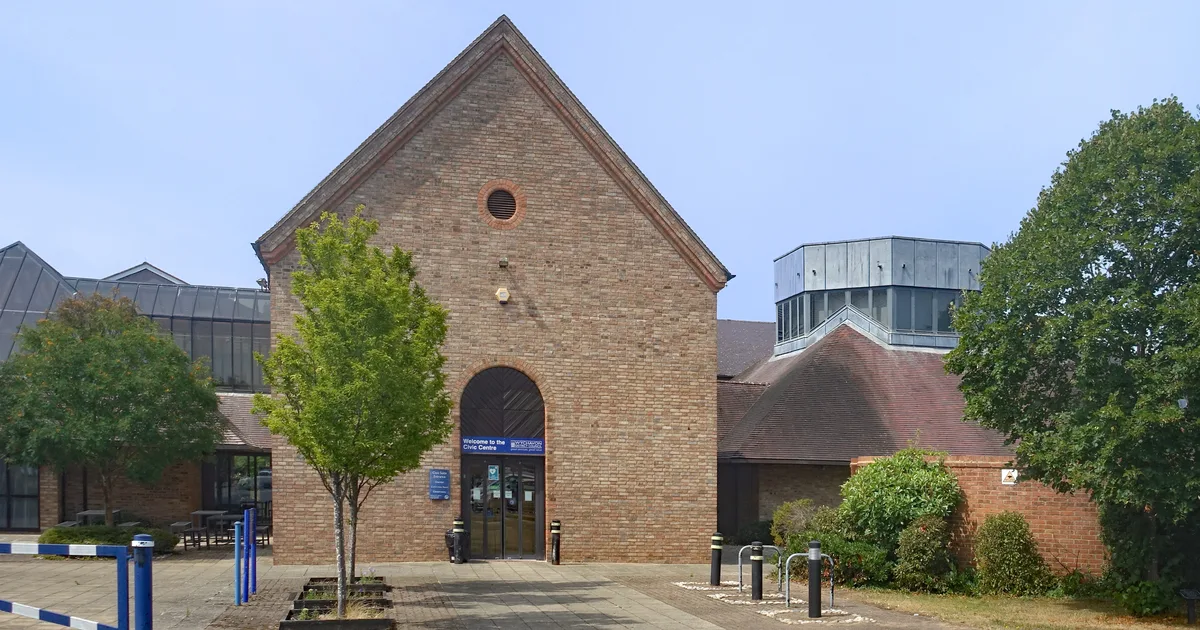

In short. The government designated Wychavon District Council under section 62A of the Town and Country Planning Act 1990 from 9am on 15 June 2026, one of nine councils designated that day, after 10.7 per cent of the major planning applications it refused between 2023 and 2025 were later allowed on appeal, against a 10 per cent threshold [2] [5]. The designation lets developers of schemes of 10 or more homes apply straight to the Planning Inspectorate instead of the council [1]. Wychavon argues its more recent figures, 5.2 per cent for the 12 months to March 2026, should have been used instead, has secured permission for judicial review, and will argue the case at a two-day High Court hearing on 8 and 9 December 2026 [4]. No other council designated alongside it has gone to court over its designation [5].
Section 62A of the Town and Country Planning Act 1990 exists to punish councils that keep saying no to housing developments a planning inspector would later say yes to. The test is mechanical: over a rolling assessment period, the government tracks what proportion of a council's refused major applications, those of 10 or more homes, get overturned on appeal. Cross 10 per cent and the department designates the council, and for two years afterwards, any developer with a qualifying scheme in that area can bypass the council entirely and apply straight to the Planning Inspectorate [1] [5].
Wychavon District Council's rate for the two years to 31 March 2025 was 10.7 per cent [2]. The government's own notice of designation, published by the Ministry of Housing, Communities and Local Government and signed into effect from 9am on 15 June 2026 by the then housing secretary, Steve Reed, records that figure as the basis for the sanction [2]. Wychavon was not alone that day. Cherwell, Dacorum, Epping Forest, Hertsmere, Malvern Hills, Rossendale, South Tyneside and Staffordshire Moorlands were designated on the same notice, joining Lewes District Council, designated under an earlier round in May 2024, as the tenth authority to fall under the regime [5].
The council's dispute is about which figures the government used
Wychavon's case does not deny that its appeal rate exceeded 10 per cent in the assessment window the government used. It argues that window was already out of date by the time the designation landed. Cllr Emma Kearsey, the council's deputy leader and cabinet member for planning, said the council had "had very strong legal advice on this" before deciding to litigate [3]. The council's legal team point to more recent performance: in the 12 months to March 2026, only 5.2 per cent of Wychavon's refused applications were allowed on appeal, less than half the rate that triggered the sanction [1]. Their argument is that the Secretary of State should have taken that more recent evidence into account before designating the council, not relied on a two-year-old snapshot that Wychavon says no longer describes how it decides applications [1].
Kearsey was blunter about how the council sees the sanction itself: "We are not going to lie down and take what the government has inflicted on us, it's totally and utterly wrong," she told the Evesham Observer, adding that the council wanted "to demonstrate to the people of Wychavon, and the people of this country, how badly we've been treated in respect of planning" [3]. That is advocacy, not evidence, and it sits alongside the narrower, document-based argument about which assessment period the law requires the department to use.
A judge has already agreed there is a case to answer
Judicial review claims need permission from the High Court before they proceed to a full hearing, and permission is refused more often than it is granted. Wychavon has cleared that bar. The council's director of planning, Ian Macleod, confirmed that "the court has granted permission for the judicial review to proceed" [4]. A two-day hearing is listed for 8 and 9 December 2026 at Birmingham Civil Justice Centre [4]. Permission to proceed is not a finding on the merits: the court has decided only that Wychavon's argument is arguable enough to deserve a full hearing, not that the department acted unlawfully in designating the council [4].
What makes the case worth watching beyond Wychavon's own boundary is that nobody else designated under section 62A has tested the regime in court. Local Government Lawyer's own review of the designation round, published shortly after the June notices went out, records the nine councils named that day and the one from 2024, without recording a legal challenge from any of them before Wychavon's [5]. If the December hearing goes Wychavon's way, the ruling would be the first judicial test of how the government is allowed to use its own performance data to strip a council of a planning function, a question that matters to every authority sitting close to the 10 per cent line, not just the ten already designated.
What changes for residents and developers in the meantime
The designation does not stop Wychavon's planning committee sitting or deciding applications below the major threshold. It gives developers of qualifying schemes, those of 10 or more homes, a choice they did not have before: apply to the council as usual, or route the application straight to the Planning Inspectorate for a decision, cutting the local authority out of it [1]. That choice exists now, and will keep existing through the December hearing and any judgment that follows it; a legal challenge to a designation does not suspend the designation itself. Nothing in the reporting so far suggests a developer has yet used the route against a live Wychavon application, but the mechanism is live from 15 June regardless of how the court case ends up.
The council has published its own account of the dispute, which frames the litigation as a fight for "the people of Wychavon" against a decision it calls indefensible [6]. That page is reachable but blocks automated retrieval; the quotes and figures used in this article are corroborated independently by Local Government Lawyer's and the Evesham Observer's reporting of the same statements. Whichever way the Birmingham hearing goes, the immediate practical question for anyone with a major scheme in Wychavon between now and next spring is procedural rather than political: which door do you knock on to get a decision.
Sources
- Local Government Lawyer, "Council to take Government to High Court after being stripped of powers to decide major planning applications", 21 September 2026. https://www.localgovernmentlawyer.co.uk/planning/401-planning-news/101725-council-to-take-government-to-high-court-after-being-stripped-of-powers-to-decide-major-planning-applications
- Ministry of Housing, Communities and Local Government, "Wychavon District Council: Notice of Designation", effective from 9am 15 June 2026. https://www.gov.uk/government/publications/wychavon-district-council-notice-of-designation
- Evesham Observer, "Wychavon takes Government to High Court over planning powers", 17 September 2026. https://eveshamobserver.co.uk/news/wychavon-takes-government-to-high-court-over-planning-powers-64408/
- PlanningGeek, "Wychavon High Court challenge gets December hearing over planning bypass", 22 September 2026. https://www.planninggeek.co.uk/2026/wychavon-high-court-challenge/
- Local Government Lawyer, "Route 62A" (Simon Ricketts, Town Legal), 25 June 2026. https://www.localgovernmentlawyer.co.uk/planning/318-planning-features/100916-route-62a
- Wychavon District Council, "Wychavon vows to fight planning sanction imposed by Government" (reachable but blocks automated retrieval; quotes cross-checked against sources 1 and 3). https://www.wychavon.gov.uk/news-and-alerts/wychavon-vows-to-fight-planning-sanction-imposed-by-government