A Council Borrowed a Billion Pounds on Office Blocks and a Shopping Centre. Its Government Minders Are Now Booked Until 2030, Three Years After the Council Stops Existing.
Estimated reading time: 6 minutes
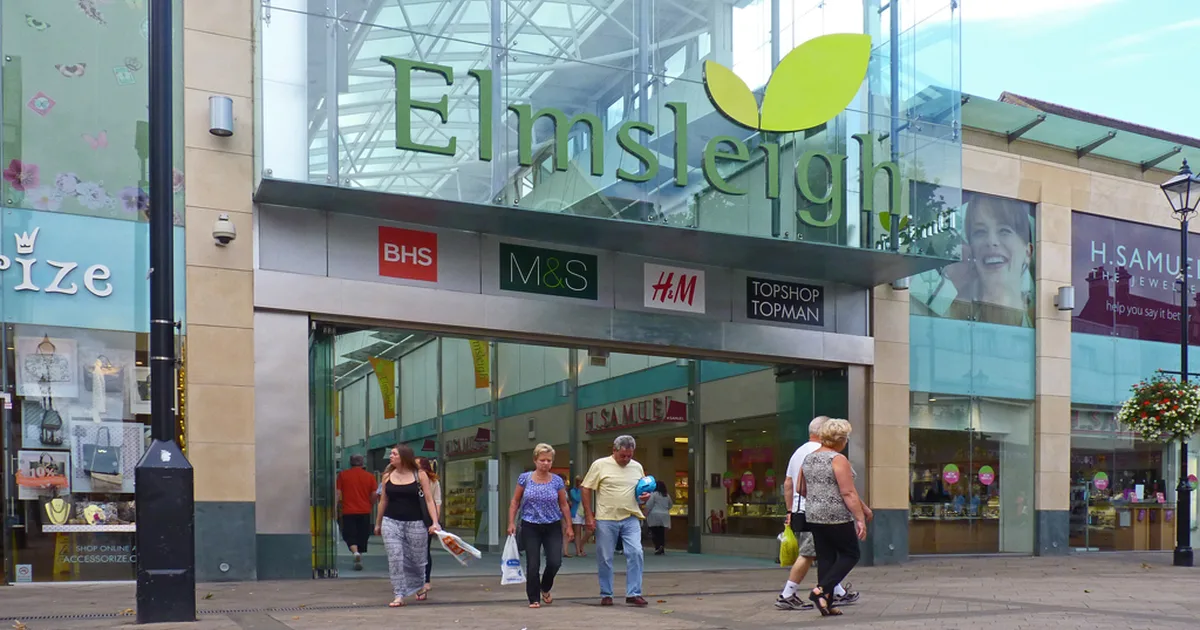

In short. Spelthorne Borough Council owes £1,087 million, run up buying eleven Thames Valley office blocks and the Elmsleigh Centre shopping centre in Staines between 2016 and 2020 [1]. A March 2025 Best Value inspection found the council failing on five separate counts and government commissioners have run its finances since May 2025 [1] [2]. On 1 September 2026 the minister extended one commissioner's appointment for the remaining life of the intervention, until 31 May 2030 [3]. Spelthorne Borough Council itself is abolished on 1 April 2027, folded into the new West Surrey Council [6].
A billion pounds, spent in four years. Between 2016 and 2020, Spelthorne Borough Council spent more than a billion pounds acquiring eleven large Thames Valley office investments and the Elmsleigh Centre, a shopping centre providing around a third of the retail space in its own town of Staines [1]. By 31 March 2024 the council's total borrowing stood at £1,087 million, which government inspectors calculated as the second-highest borrowing per capita of any district council in England, more than Liverpool or Sheffield and nearly double Bristol's, working out at over £10,000 for every one of Spelthorne's 103,000 residents [1]. Inspectors described a portfolio concentrated in one sector and one geography, which had left the council exposed to exactly the kind of risk that concentration invites [1].
Five ways the council was found wanting. A statutory Best Value inspection, published on 17 March 2025, concluded Spelthorne was failing to meet best value standards in five areas at once: use of resources, continuous improvement, governance, leadership and culture [1]. Inspectors' own words, quoted on the government's summary of the report, were blunt about what that meant for the council's chances of putting things right alone: "we do not have the confidence that the Council can address the challenges it is facing, and outlined in this report, without significant external support" [1].
What the intervention actually hands over. On 8 May 2025 the Secretary of State issued formal Directions under the Local Government Act 1999, installing four commissioners, Lesley Seary as lead, with Peter Robinson, Deborah McLaughlin and Mervyn Greer, and transferring to them the council's own governance, financial and commercial decision-making [2]. The powers taken are sweeping: commissioners can propose amendments to any budget they consider risky, appoint and dismiss the council's most senior officers, and demand access to any of the council's premises, documents, employees or members "at all reasonable times" [2]. The Directions themselves are written to run "until 31 May 2030 unless the Secretary of State considers it appropriate to amend or revoke them at an earlier date" [2].
Sixteen months in, progress is real but partial. The commissioners' second report, dated 10 June 2026 and published alongside the minister's response the following month, records that Spelthorne overspent by £10.7 million in 2025/26 and will need to draw an estimated £14 million from reserves to balance its 2026/27 budget, against £5.8 million of savings already approved for the year and a minimum £1 million more still to be found [4]. The same report notes that BP has announced it will consolidate into a single central London headquarters and relocate staff out of its Spelthorne site by early 2028, an unplanned departure the council is now assessing for its effect on the investment portfolio commissioners were sent in to fix [4]. Commissioners also record real gains: a long-outstanding Local Plan finally approved, a new chief executive in post since March 2026, and, in their own words, "an improvement in the development of trust between members and officers" [4]. In response, the minister responsible for the intervention, Alison McGovern, restructured the commissioner team itself: Peter Robinson stepped down, and a single team was created spanning both Spelthorne and neighbouring Woking Borough Council, which is under its own, separate intervention [5].
The minister's own reasoning for merging the two councils' commissioners. Announcing the change on 15 July 2026, McGovern wrote to the commissioners: "Your findings reinforce the need for a more integrated approach to risks across Spelthorne and Woking. I have therefore decided to establish a single commissioner team across both Councils," to be "led by Lesley Seary, supported by Barry Scarr, Deborah McLaughlin and Mervyn Greer" [5].
A council with an expiry date, and an intervention that outlasts it. Spelthorne will not exist as an authority for long enough to see its own recovery plan through. Both it and Woking are due to be abolished on 1 April 2027, absorbed along with Guildford, Runnymede, Surrey Heath and Waverley into the new West Surrey Council [6]. Yet the letter appointing Barry Scarr as Commercial and Finance Commissioner, published on 1 September 2026, confirms his term runs "for the remaining duration of the current Directions, until 31 May 2030" at a fee of £1,100 a day for up to 70 days a year [3]. The commissioners' own priorities, set out alongside their second report, are explicit that the work ahead is about managing Spelthorne's exit rather than its long-term future: producing an updated financial strategy to hand to West Surrey by December 2026, resolving the fate of its Knowle Green Estates housing company, and reducing its portfolio of nightly paid temporary accommodation, all before a vesting day the council will not be present for [4]. Whatever the Directions' outer limit of 2030 is intended to cover, the practical question for residents is a narrower one: what condition the books are in on the day West Surrey Council inherits them, eighteen months from now.
Sources
- Ministry of Housing, Communities and Local Government, Spelthorne Borough Council Best Value Inspection report, published 17 March 2025. https://www.gov.uk/government/publications/spelthorne-borough-council-best-value-inspection-report/spelthorne-borough-council-best-value-inspection-report
- Ministry of Housing, Communities and Local Government, Spelthorne Borough Council Directions made under the Local Government Act 1999, 8 May 2025. https://www.gov.uk/government/publications/spelthorne-borough-council-directions-made-under-the-local-government-act-1999-8-may-2025
- Ministry of Housing, Communities and Local Government, Spelthorne Borough Council commissioner appointment letter, 1 September 2026. https://www.gov.uk/government/publications/spelthorne-borough-council-commissioner-appointment-letter-1-september-2026
- Spelthorne Borough Council Commissioners, second report to the Secretary of State, 10 June 2026. https://www.gov.uk/government/publications/spelthorne-borough-council-commissioners-second-report
- Alison McGovern MP, Minister of State for Local Government and Homelessness, ministerial response to Commissioners' second report, 15 July 2026. https://www.gov.uk/government/publications/spelthorne-borough-council-ministerial-response-to-commissioners-second-report
- Surrey LGR Hub, "West Surrey Council" (constituent councils and vesting day). https://www.surreylgrhub.gov.uk/west-surrey-council