Is Asylum Accommodation Being Steered Into Opposition Seats? The Published Figures Point the Other Way, and the One Document That Could Settle It Has Not Been Released.
Estimated reading time: 7 minutes
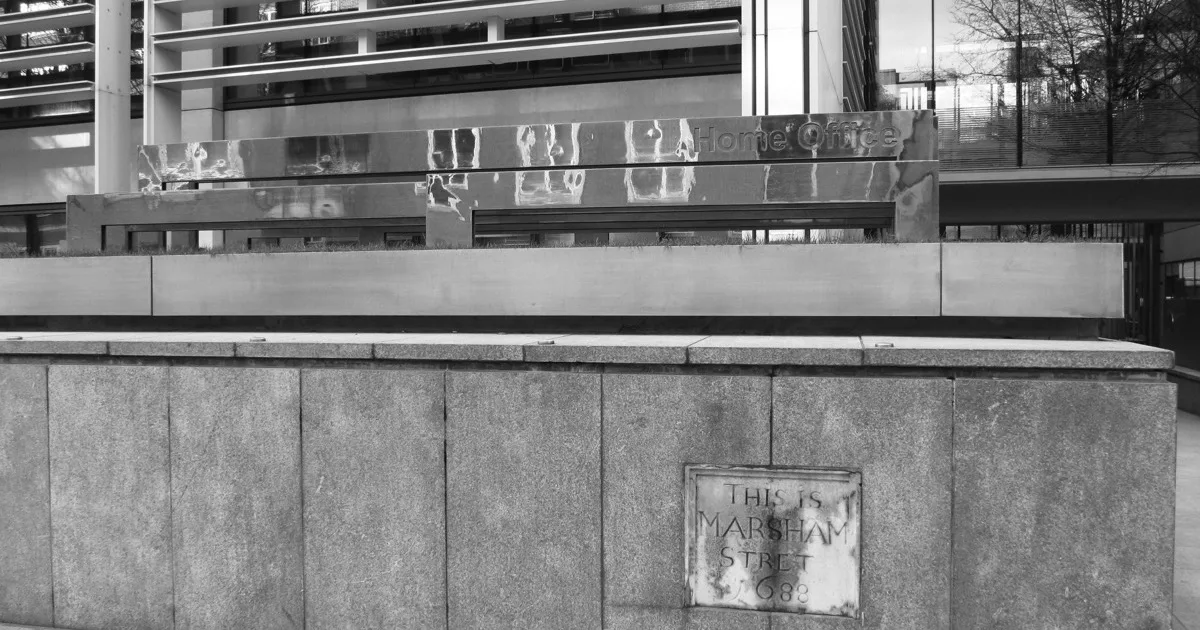

In short. This is national context, kept apart from this site's council reporting. The claim under test is that the government is placing asylum accommodation in areas it has already lost, to spare its own seats. The one case cited for it, the proposed 1,256-place site at the former Bicester Garrison in a Liberal Democrat constituency, is real: the Home Office announced it on 25 June 2026 without consulting the district council, and the council has objected [1]. The Home Office's own figures for where supported asylum seekers live show the opposite pattern across the country: as at 30 June 2026, 78.6 per cent of the 80,947 people in receipt of asylum support were in local authorities where Labour holds most of the parliamentary seats, against Labour's 65 per cent of seats in Great Britain [2]. The five large military sites in the Home Office's factsheets sit in four Conservative seats and one Liberal Democrat seat, which is where the Ministry of Defence's surplus estate is [3]. Neither pattern tells you why a site was chosen. The document that would is the selection record, and it has not been published. A weekly watch now tracks both datasets on this site, and the Bicester planning case has gone to the sister site trackedchanges.co.uk for a line-by-line reading.
Start with what is verified about Bicester. On 25 June 2026 the Home Office announced that Site A of the former Bicester Garrison, between Piddington and Upper Arncott in Oxfordshire, would be used to accommodate people seeking asylum; Cherwell District Council says it was not consulted in advance and was told hours before the announcement [1]. The Home Office's own planning statement puts the capacity at up to 1,256 asylum seekers in modular accommodation and says it is seeking consent through the Urgent Crown Development procedure, a route in which the council is a consultee and the government decides [4]. The consultation ran from 7 to 17 September 2026 and the council submitted a formal objection on the last day, citing transport, infrastructure, community impact, drainage, site management and missing planning information [1]. The Home Office factsheet for the site, updated 9 September 2026, describes it as subject to feasibility assessments with no final decision, and says the accommodation would run for a minimum of ten years if taken forward [5]. The constituency is Bicester and Woodstock, won in July 2024 by Calum Miller for the Liberal Democrats [6].
So the example holds as an example: a large site, imposed centrally, in a seat the governing party does not hold. That is a documented accountability problem whatever the motive, and the council's objection is the document to read on it. It is not evidence of the motive.
What the national figures say
The Home Office publishes, every quarter, the number of people in receipt of asylum support in each local authority [2]. This site has joined that dataset to the July 2024 general election result for every constituency, classing each authority by the party that won more than half of its seats [6]. As at 30 June 2026:
- 78.6 per cent of supported asylum seekers were in the 141 authorities where Labour holds most seats. Labour holds 65 per cent of Great Britain's seats.
- 6.1 per cent were in the 52 Conservative-majority authorities; the Conservatives hold 19.1 per cent of seats.
- 1.7 per cent were in the 21 Liberal Democrat-majority authorities; the Liberal Democrats hold 11.4 per cent of seats.
- 13.3 per cent were in 72 authorities where no party holds a majority of the seats.
The ten authorities hosting the most people are Birmingham, Liverpool, Coventry, Manchester, Sandwell, Leeds, Nottingham, Leicester, Wigan and Hillingdon, all Labour-held except Leicester, where no party holds a majority of the seats [2]. If accommodation were being steered away from Labour seats, this is the series in which it would show, and it shows the reverse. The Home Office's stated reason is not political: its allocation policy places people on a no-choice basis where accommodation is available [7], and for twenty years that has meant the cheaper housing of northern and Midlands cities, which mostly return Labour MPs. The figures are consistent with that explanation. They do not prove it either; they are a distribution, and a distribution has no motive.
The large sites are a different process
The five sites in the Home Office's military-sites factsheets, Wethersfield (operating since July 2023), Crowborough (operating since 22 January 2026, capacity 540), and the proposals at Bicester, Barnham and Linton-on-Ouse, sit in four Conservative constituencies and one Liberal Democrat one [3]. Taken alone, that looks like the claim. Taken with the rest, it looks like the Ministry of Defence's estate: disused barracks and airfields are rural, and rural England mostly returns Conservative MPs. Five sites cannot establish a pattern in either direction, and the planning route matters more than the count. Bicester and Barnham are going through the Urgent Crown Development procedure, under which a council cannot refuse [5]. The guidance for that procedure is published and is itself a document worth reading in full [8].
Why the mechanism matters
The claim as usually put is that moving migrants into an area costs the governing party votes there, so it chooses areas it has already lost. Two things about that are checkable. First, people in receipt of asylum support cannot vote in a parliamentary election: the franchise is for British, Irish and qualifying Commonwealth citizens [9]. Any electoral effect would run through the reaction of existing voters, which is a different and harder claim to evidence. Second, the dispersal figures above show the governing party carrying most of the existing accommodation in its own seats, which is the opposite of what the mechanism predicts. A theory that fits one proposal and contradicts the national series is not yet a finding.
What would settle it, and where it has gone
The only documents that could show whether electoral geography played any part in choosing Bicester are the selection records: the criteria, the longlist and shortlist of candidate sites, the comparative assessments and the submissions to ministers. They are not published. The Home Office's Statement of National Importance for Bicester sets out the government's case for urgency and national importance but is redacted and does not list the alternatives considered [4]. A Freedom of Information request for those records, including whether constituency representation, council control or anticipated opposition were considered, is the honest next step, and this site will report the answer whatever it is.
Three documents have been pushed to the top of the queue at the sister site trackedchanges.co.uk, whose job is to read government documents line by line: the Bicester Statement of National Importance, the Urgent Crown Development guidance, and the allocation of asylum accommodation policy. The reason is the division of labour. This site can show where accommodation is and what the councils say; it cannot test whether a statement of national importance meets its own legal tests, which alternatives it considered, or what the redactions hide. Those teardowns will link back here, and the asylum accommodation watch on this site, refreshed weekly from the Home Office's factsheets and the support-by-authority dataset, will show any change in the distribution or the sites as it happens.
Sources
- Cherwell District Council, "Site A, Bicester Garrison: Home Office proposals" (announcement of 25 June 2026, lack of prior consultation, Urgent Crown Development consultation 7 to 17 September 2026, the council's objection). https://www.cherwell.gov.uk/info/118/communities/1404/site-a---bicester-garrison-home-office-proposals
- Home Office, Immigration system statistics year ending June 2026, "Asylum seekers in receipt of Home Office support by local authority" detailed dataset (Asy_D11), published 27 August 2026; figures as at 30 June 2026 summed by authority. https://assets.publishing.service.gov.uk/media/6a85c5e654bcee010d514574/support-local-authority-datasets-jun-2026.xlsx
- Home Office, "Asylum accommodation at military sites: factsheets" (collection; Wethersfield, Crowborough, Bicester, Barnham, Linton-on-Ouse). https://www.gov.uk/government/publications/asylum-accommodation-at-military-sites-factsheets
- Home Office, "Statement of National Importance", MOD Bicester (Site A), Urgent Crown Development application, redacted (capacity up to 1,256; modular accommodation; planning route). https://assets.publishing.service.gov.uk/media/6a91601a9a177a1decf97b31/Bicester_-_Statement_of_National_Importance_redacted.pdf
- Home Office, "MoD Bicester (site A), Oxfordshire: factsheet", version 2.0, updated 9 September 2026. https://www.gov.uk/government/publications/asylum-accommodation-at-military-sites-factsheets/mod-bicester-site-a-oxfordshire-factsheet
- Democracy Club, results of the 4 July 2024 general election by candidate (CC BY 4.0), used for every constituency's winner and for classing each local authority. https://candidates.democracyclub.org.uk/data/export_csv/?election_id=parl.2024-07-04&field_group=results
- Home Office, "Allocation of asylum accommodation policy", version 16.0, updated 29 July 2026. https://www.gov.uk/government/publications/asylum-accommodation-requests-policy/allocation-of-asylum-accommodation-policy-accessible
- Ministry of Housing, Communities and Local Government, "Crown Development and Urgent Crown Development" guidance, 12 May 2025. https://www.gov.uk/guidance/crown-development
- GOV.UK, "Register to vote" (who is eligible to vote in UK elections). https://www.gov.uk/register-to-vote