Luton's New Coalition Took Over the Executive. The Rules for Hiring Its Own Directors Broke on the Way In.
Estimated reading time: 6 minutes
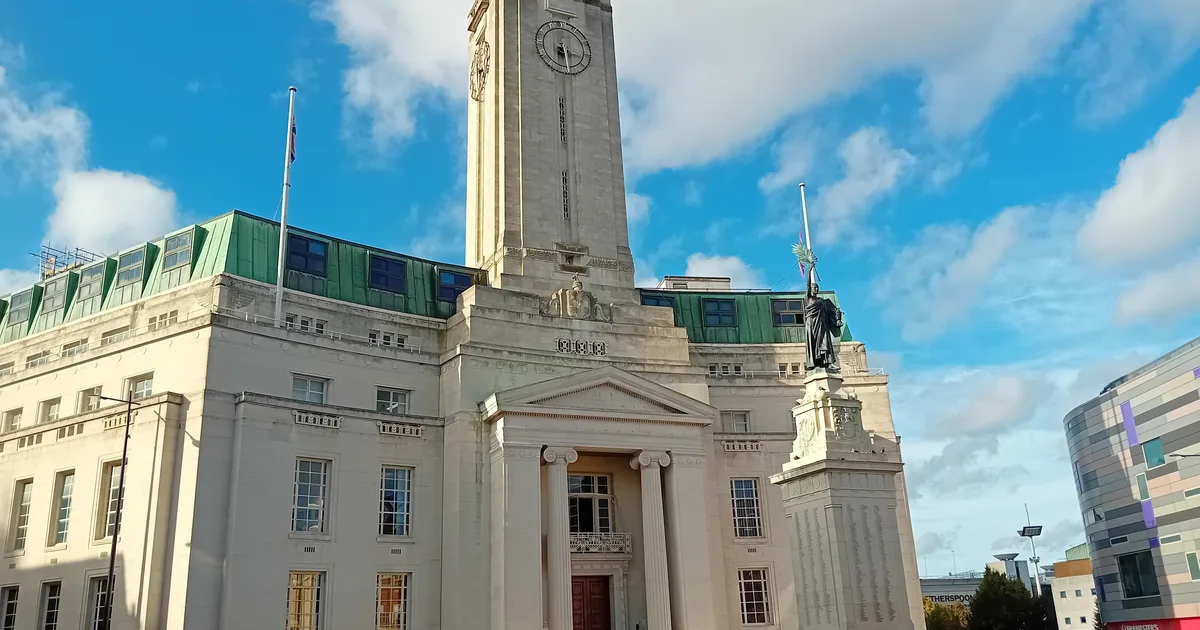

In short. A Liberal Democrat, Independent Alliance and Conservative coalition took control of Luton Borough Council's Executive on 14 September 2026, ending Labour's continuous run in charge of the town hall [1]. Full Council met again on 22 September to work through what that changed, and what it legally could not: the seats Labour holds on the council's ordinary committees are fixed by a separate statutory formula tied to group size, and stayed almost exactly where they were [1]. What did not survive the handover was the formula for staffing the panels that hire the council's own corporate and service directors, built for a council with several small minority groups rather than one large opposition facing a merged coalition, and the Director of Governance told Council plainly that it was "no longer workable" [1].
A council does not have one seat of power. It has at least two, and they run on different clocks. One is the Executive, which a simple majority of the whole council can hand to whoever it likes at any meeting, and which changed hands in Luton twice inside four months this year. The other is the set of ordinary committees, audit, licensing, planning, standards, whose party make-up is fixed by a statutory formula in the Local Government and Housing Act 1989 and reviewed only when group membership itself changes. This week's Full Council report is a rare chance to watch a council work through what a change of control at the first does, and does not, do to the second.
The seats that did not move
Luton's ordinary committees, the ones covered by the 1989 Act's political balance duty, still answer to the arithmetic of registered group membership, not to who runs the Executive. Council's own figures put it plainly: of 54 seats spread across committees including Administration and Regulation, Audit and Governance, Constitution, Development Management and Petitions and Representations, Labour holds 26, or 48.15 per cent, against a council-wide voting representation of 47.73 per cent [1]. The Liberal Democrats hold 16 seats (29.63 per cent against 29.55 per cent representation), the Independent Alliance Group 8 (14.81 per cent against 15.91 per cent) and the Conservatives 4 (7.41 per cent against 6.82 per cent) [1]. Four non-aligned independents sit outside the calculation entirely, because the 1989 Act's balance duty applies only to registered political groups [1].
None of that is a Labour trick or an oversight. The proportions match its share of the chamber almost to the decimal point, which is exactly what the 1989 Act requires: not all seats to one group, the largest group getting the majority of seats, and everyone else's share tracking their share of the council [1]. The point is narrower and, for a reader trying to understand how the town hall actually works, more useful: Labour lost the vote that hands out ministerial-style jobs and control of the budget, and kept, entirely lawfully and by the same margin as before, the largest single bloc on the committees that audit spending, decide planning applications and hear standards complaints against councillors of every party, including its own.
There was one loose thread in the numbers, and Council's report is candid about it. Cllr Saima Hussain told the Monitoring Officer on 1 September that she no longer wished to sit as a Labour member and would become a non-aligned independent, a change that landed a fortnight before the leadership vote it had nothing to do with [1]. Because one member moving to non-aligned status does not shift the statutory calculation, the Monitoring Officer held the matter over rather than reporting it to the extraordinary meeting on 3 September, folding it instead into this week's routine review [1]. It is a small detail, but it shows the machinery running exactly as designed: a change in one member's registration is tracked and reported, on its own timetable, regardless of what else is happening in the chamber that week.
The formula that broke
Where the old arithmetic did give way was in the rules for staffing appointment panels, the committees that interview and recommend who gets hired as a corporate or service director, or as chief executive. The existing formula for a director appointment panel called for six members split "3,1,1,1": three from the largest group, one each from the next three [1]. A chief executive appointment panel was bigger still, nine members split "5,2,1,1" [1]. Both assume a council with one dominant group and several distinct smaller ones sitting apart from each other. Luton, as of 14 September, no longer has that shape: it has one large opposition group and three smaller ones that now sit together, as a single Controlling Group, on the Executive [1].
The report's own verdict was unambiguous: the old formulas "are no longer workable under the current political disposition of the Council" [1]. Its replacement for the director appointment panel: five members, four drawn from the Controlling Group (defined in the report as the Liberal Democrat, Independent Alliance and Conservative groups together) and one from the opposition [1]. Under the old rules, three distinct minority groups each had a guaranteed seat at the table when the council chose who would run its services. Under the new one, three of those groups now sit as a single bloc, and the arithmetic that used to spread seats across several independent minorities instead concentrates four of five seats with whichever groups currently hold the Executive, leaving Labour, still the single largest group in the chamber, with exactly one.
Portfolios and the boards that follow them automatically
Some seats move the moment the Executive does, by design. The Health and Wellbeing Board's membership is defined not by name but by job title, so the report simply updates who holds which title: Cllr Amjid Ali, the new Executive Leader, becomes its chair, Cllr Richard Underwood takes the seat reserved for the Adult Social Care portfolio holder, and Cllr Khtija Malik takes the one reserved for Public Health, alongside a nominee still to be identified from the Labour opposition [1]. The council's own appendix, updated 18 September, still lists the Regeneration and Inclusive Growth portfolio as "name to be confirmed" on several outside boards [1], a gap Local Democracy Reporting Service coverage of the same 22 September meeting fills in: former Labour deputy leader turned Conservative councillor Aslam Khan was confirmed in that portfolio "last night", the final appointment settled [2]. The same coverage sets out the rest of the executive Ali built from his three-party coalition: Cllr Rob Roche as deputy leader and housing portfolio holder, Cllr Steve Stephens on waste, climate change and neighbourhood services, Cllr Adrees Latif on sustainable development and highways, Cllr Khtija Malik moving from Saleem's executive to public health, Cllr Lee Bridgen on children's services, Cllr Gillian Fry on skills and education, Cllr Matt Fry on finance, Cllr Richard Underwood on adult social care and Cllr Rumi Chowdhury, another defector from Labour's executive, on women, equalities and community safety [2].
One ex-Liberal Democrat councillor was left out entirely. David Franks, who quit the party to sit as a non-aligned independent shortly before the vote that made Ali leader, was not offered a seat on the reallocated committees, a decision Ali defended to the local democracy reporter on procedural rather than personal grounds: "The allocation of committee places was a procedural matter. We're not prepared to establish a fair principle and then go against it when it suits us" [2]. Saleem, the leader Ali replaced, was elected to chair the Overview and Scrutiny Board, putting her in the position of formally scrutinising the administration that removed her [2].
Two committee systems changed hands at different speeds this month in Luton. One flipped in a single vote on 14 September. The other stayed put, by law, until the numbers behind it actually move. The gap between them is where a reader who wants to know who really runs a council has to look twice: once at who holds the ministerial jobs, and once at who still sits on the committee that can call them in to explain themselves.
Sources
- Luton Borough Council, Director of Governance and Monitoring Officer, report to Full Council, "Local Government & Housing Act 1989 - Constitution of Committees (Political Balance), nominations to vacant seats and other changes consequent upon the decision of Full Council on 14th September 2026", agenda items 13.2 and 13.3, for the meeting of 22 September 2026, including Appendix A (Composition of Committees) and Appendix B (Executive Advisory Groups, Strategic Programme Boards and Other Bodies, updated 18 September 2026). https://democracy.luton.gov.uk/CMIS5Public/Document.ashx?czJKcaeAi5tUFL1DTL2UE4zNRBcoShgo=absr1I06gBiGzsam1dwZbxSuSQQb9%2f4DLtnTodHanscMTAJCHus2Dg%3d%3d&rUzwRPf%2bZ3zd4E7Ikn8Lyw%3d%3d=pwRE6AGJFLDNlh225F5QMaQWCtPHwdhUfCZ%2fLUQzgA2uL5jNRG4jdQ%3d%3d&mCTIbCubSFfXsDGW9IXnlg%3d%3d=hFflUdN3100%3d&kCx1AnS9%2fpWZQ40DXFvdEw%3d%3d=hFflUdN3100%3d&uJovDxwdjMPoYv%2bAJvYtyA%3d%3d=ctNJFf55vVA%3d&FgPlIEJYlotS%2bYGoBi5olA%3d%3d=NHdURQburHA%3d&d9Qjj0ag1Pd993jsyOJqFvmyB7X0CSQK=ctNJFf55vVA%3d&WGewmoAfeNR9xqBux0r1Q8Za60lavYmz=ctNJFf55vVA%3d&WGewmoAfeNQ16B2MHuCpMRKZMwaG1PaO=ctNJFf55vVA%3d
- Luton Today (Euan Duncan, Local Democracy Reporter), "Who's who in Luton council's new executive", 23 September 2026. https://www.lutontoday.co.uk/news/politics/council/whos-who-in-luton-councils-new-executive-9158186