Inspectors Found Bullying, Misogyny and a Budget That Does Not Add Up at Bedford Council. The Government's Fix Is Three Years of Commissioners.
Estimated reading time: 7 minutes
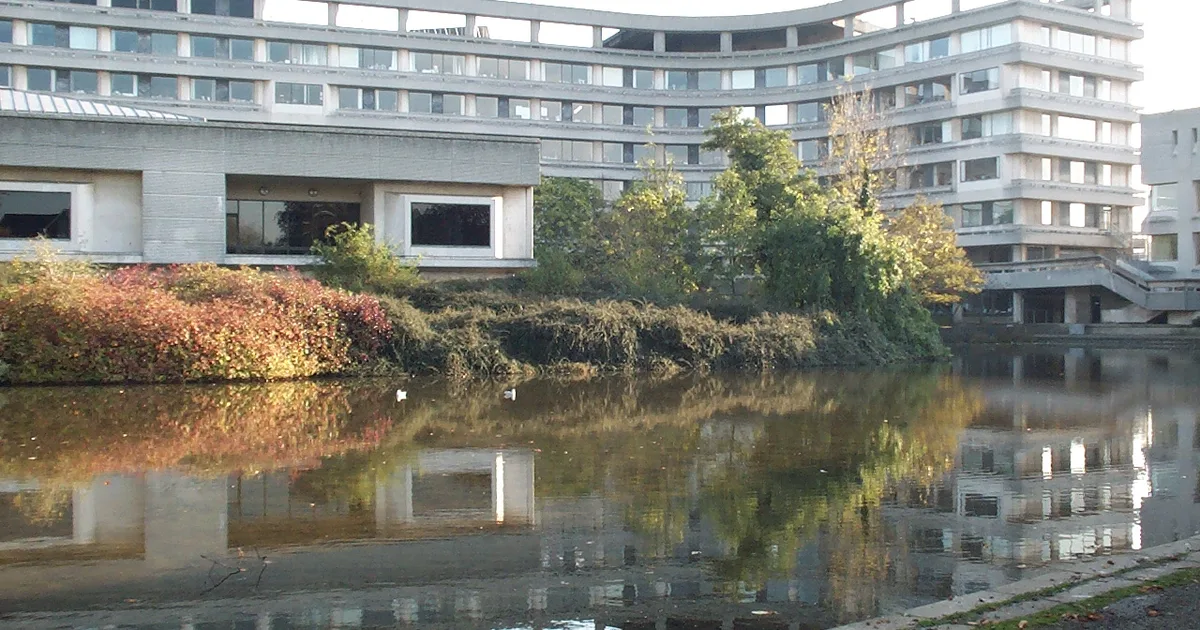

In short. A Best Value Inspection team spent eight days on site at Bedford Borough Hall between February and April 2026, examining the council's leadership, governance, culture, use of resources and finances [1]. Their report, published on 15 October alongside a letter from the Ministry of Housing, Communities and Local Government, found elements of failure in every theme it examined and recommended the council cannot fix itself without outside help [1] [2]. Ministers are now proposing three years of statutory intervention, including a team of government-appointed Commissioners with powers to exercise some of the council's own functions [2]. The council has until 28 October 2026 to make representations before a final decision is announced [2].
What the inspectors found
Paul Najsarek and Margaret Lee OBE were appointed as Lead and Assistant Inspector on 10 February 2026, joined by a third inspector, Tasnim Shawkat, on 31 March [1]. Over eight days on site and more than 70 face-to-face interviews, the team tested Bedford Borough Council, which operates under a directly elected mayor without overall political control, against the seven themes of the government's Best Value statutory guidance [1]. Their foreword does not soften the conclusion: the council is in "a difficult and deteriorating position overall", with "significant challenges across all the Best Value themes but particularly in leadership, governance, culture and use of resources" [1]. The inspectors conclude they have "no confidence that the necessary improvement will be secured without external intervention" [1].
On leadership, inspectors describe challenges "in all parts of the organisation, politically and managerially", citing an "inward looking, attritional and combative political culture", weak cross-party working and a "hollowed out" corporate centre [2]. On governance, they find the council's arrangements inadequate for a mayoral authority with no overall control, pointing to scrutiny that is "almost always political" and insufficient weight given to statutory officer advice [2].
What inspectors heard about culture. The report records that inspectors "heard evidence from a number of people about a bullying and misogynistic culture within the ruling cabinet and across political groups", with poor behaviour also described between members and officers and among officers themselves [1]. The report is explicit that these are allegations put to the inspection team, not findings against any named individual: "The Council has not had a culture where people have felt able to report these issues and therefore they have not been systematically investigated and addressed" [1]. Inspectors note separately that none of this had been raised through a formal complaint [1].
The money
The inspection found "limited and insufficient evidence of action to improve" the council's finances despite the scale of the problem being widely acknowledged internally [2]. The figures in the report explain why. Bedford needed 20 million pounds of Exceptional Financial Support, government loans that let a council balance a budget it otherwise could not, to set its 2025/26 budget, and up to a further 25 million pounds for 2026/27, with a possible extra 33 million pounds tied to an incomplete capital project [1]. Planned revenue expenditure for 2026/27 stands at 253 million pounds [1]. The council's own February 2026 budget report forecasts deficits of 27.6 million pounds in 2027/28, 25.7 million pounds in 2028/29 and 32.4 million pounds in 2029/30, adding up to roughly 90 million pounds over three years on top of this year's support [1]. General reserves were projected at 12.7 million pounds in March 2026, with other unringfenced reserves of 8.4 million pounds, a level the report describes as low under the CIPFA Resilience Index [1]. Overspending on day-to-day services has nearly doubled since 2023/24, from 9.8 million pounds to 17.0 million pounds last year, driven by adult social care, temporary accommodation and children's services [1]. The 2026/27 budget relies on 4.2 million pounds of savings from roughly 120 posts being cut, a plan inspectors say they saw "limited evidence" was deliverable [1].
None of this arrived without warning. The Local Government Association's Corporate Peer Challenge flagged risks to financial sustainability in 2023, and a CIPFA financial resilience and governance review the council itself commissioned found in July 2025 that the position "requires urgent action" [2]. The council's own external auditor identified two significant weaknesses in its 2024/25 value-for-money arrangements, relating to the capacity of the finance team and the council's ability to secure financial sustainability [2]. The inspectors conclude the council has "not systematically managed or implemented recommendations" from any of these reviews, leaving the same weaknesses unresolved years later [2].
What the government is proposing
The Secretary of State is "minded to" use powers under section 15 of the Local Government Act 1999 to appoint a team of Commissioners with responsibilities covering corporate and political leadership, governance, finance and transformation, some holding powers to exercise the council's own functions directly, plus a Political Commissioner to work alongside the council's elected leadership [2]. The proposed Directions, setting out what the council would be required to do, would stay in place for three years [2]. If Commissioners judge the council is not engaging, the letter says, they will report that to the Secretary of State, who will consider further measures; if progress is faster than expected, de-escalation will be considered instead [2]. Nothing is decided yet. James Blythe, the MHCLG deputy director who signed the letter, invited the council to make representations by 28 October 2026, ten working days after the letter was sent, before ministers decide what, if any, Directions to issue [2].
This is an escalation from where this site last placed Bedford. A piece here on 12 September, comparing Best Value Notices sent to Shropshire and Hillingdon, listed Bedford as one of two councils then under a statutory inspection, "a step short of intervention" [3]. The inspection has now reported, and the step it recommends is the harder power: Commissioners, not a notice.
The council's response
Bedford Borough Council's chief executive, Laura Church, said in a statement on 15 October that the council acknowledged "the significance of the report and the need to increase the pace and scale of change", adding that staff "have continued to deliver vital services during a demanding period, and their expertise and commitment will be central to the improvements ahead" [4]. Mayor Tom Wootton, in a separate statement the same day, said he took the findings "extremely seriously" and pointed to steps taken since he became mayor in May 2023, including commissioning independent scrutiny and developing an Improvement Plan [5]. Both statements commit to engaging with the representations process rather than contesting the report's findings.
What is still open
The 28 October deadline is five days away. Whether the council's representations change the shape of the intervention, and what the final Directions actually require once issued, are not yet public. What the inspectors' report already establishes, in the council's own disclosed figures rather than anyone's characterisation of them, is a council whose financial support need has doubled in a year, whose overspends have nearly doubled in two, and whose own staff told a government inspection team about a workplace culture that had never been formally reported. Whether three years of Commissioners changes any of that is the question this site intends to be checking, document by document, as the Directions are published.
Sources
- Paul Najsarek, Margaret Lee OBE and Tasnim Shawkat, "Bedford Borough Council: Best Value Inspection report", GOV.UK (submitted June 2026, published 15 October 2026). https://www.gov.uk/government/publications/bedford-borough-council-best-value-inspection-report/bedford-borough-council-best-value-inspection-report
- James Blythe, Deputy Director, Local Government Stewardship and Interventions, letter to Laura Church, Chief Executive of Bedford Borough Council, with Annex, Ministry of Housing, Communities and Local Government (15 October 2026). https://assets.publishing.service.gov.uk/media/6acf8e8e71dbe79328fd4552/Bedford_Letter_to_Chief_Executive.pdf
- Civic Scrutiny, "Shropshire Council and a London Borough Received Almost Word-for-Word Warning Letters From Whitehall on the Same Day. Only the Name at the Top Changed." (12 September 2026). https://www.civic-scrutiny.co.uk/2026-updates/shropshire-hillingdon-best-value-notices.html
- Bedford Borough Council, "Bedford Borough Council statement on Best Value Inspection report" (15 October 2026). https://www.bedford.gov.uk/news/2026/bedford-borough-council-statement-best-value-inspection-report
- Bedford Borough Council, "Statement from Mayor Tom Wootton on Bedford Borough Council's Best Value Inspection" (15 October 2026). https://www.bedford.gov.uk/news/2026/statement-mayor-tom-wootton-bedford-borough-councils-best-value-inspection