Slough Hasn't Had a Clean Audit Opinion Since 2018. Its Auditor Has Just Reached for a Power It Almost Never Uses.
Estimated reading time: 6 minutes
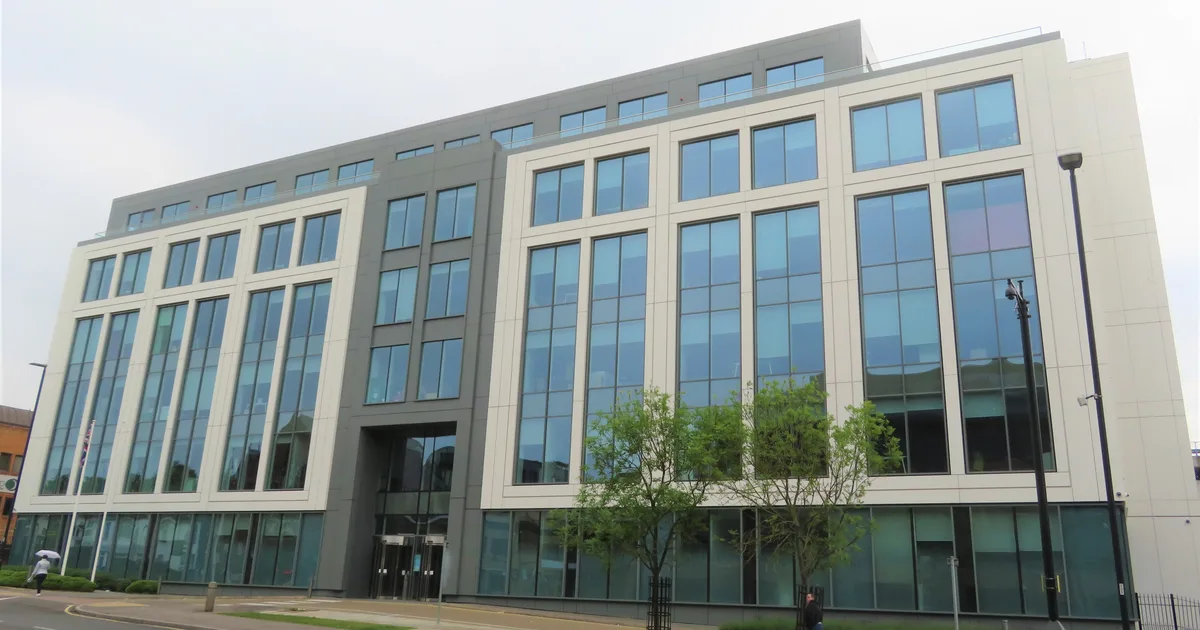

In short. Grant Thornton, Slough Borough Council's external auditor, published a Report in the Public Interest on 29 October 2026, a power it holds under section 24 of the Local Audit and Accountability Act 2014 to put findings before the public when it judges them serious enough [1]. The report covers seven accounting periods in a row, 2018/19 to 2024/25, none of which has received a clean audit opinion [1]. The first of those audits alone turned up 188 million pounds of corrections to the council's draft accounts [1]. Council leader Cllr Wal Chahal says the report covers old ground and does not reflect the progress made since [2].
A power auditors almost never use
A Report in the Public Interest is not a routine audit output. Under Schedule 7 of the Local Audit and Accountability Act 2014, an auditor may issue one when it judges that a matter arising from its work is significant enough that it should be formally considered by the council and brought to wider public attention, rather than left inside the usual cycle of audit findings reports and committee papers [1]. The law requires the council to hold a public meeting within a month of receiving it and decide, in public, what action to take [1]. Slough's is set for full council on 26 November 2026 [2].
Grant Thornton has been Slough's auditor since 2018/19. In that time it has issued statutory recommendations twice before, in May and July 2021, and escalated again with a formal letter to the council's chief executive in September 2024 after concluding those recommendations had not been acted on quickly enough [1]. The public interest report is a step up from all of that. Grant Thornton's own explanation for reaching for it now cites the scale of the weaknesses found, the length of time they have persisted, and the benefit of setting out the full seven-year picture in one place rather than leaving it scattered across years of separate findings reports [1].
Seven years, no clean opinion
Slough's last unqualified audit opinion was issued in November 2018, covering the 2017/18 accounts [1]. Every audit since has ended in a disclaimer, the auditor's most serious verdict short of refusing to audit at all, meaning Grant Thornton could not gather enough evidence to say whether the accounts were reliable in either direction [1]. The 2018/19 audit, delayed for years by the scale of the problems it uncovered, was not finally concluded until 8 November 2024. The six years after that, 2019/20 to 2024/25, were each disclaimed under the government's backstop rules, which force an audit to a close by a fixed statutory date whether or not the auditor has seen enough evidence [1].
The report's own account of the first of those audits shows why it took so long. Grant Thornton's work on the 2018/19 accounts found more than 50 separate adjustments were needed, touching roughly 80 percent of the disclosure notes and 22 key accounting areas, totalling around 188 million pounds of corrections: 155 million pounds to the balance sheet and 79 million pounds to the General Fund [1]. The single largest contributor was a long-running miscalculation of the Minimum Revenue Provision, the statutory charge councils must set aside against borrowing, which had been wrong since 2016/17 and understated by around 33 million pounds in 2018/19 alone, over a period in which the council's own borrowing had roughly quadrupled, from about 180 million pounds to 760 million pounds [1]. Grant Thornton found no evidence that any of this arose from fraud, but concluded plainly: "Slough Borough Council has failed in its statutory duty to prepare and publish timely and accurate financial statements" [1].
Five finance chiefs in five years
The report attributes much of the delay to turnover at the top of the finance function. Slough has had five different Section 151 Officers, the statutory post responsible for the proper administration of a council's finances, since 2021, several of them interim appointments covering gaps left by officers who departed mid-recovery [1]. Each successive officer inherited incomplete records and had to revisit or restart work left by their predecessor, the report says, which is exactly the kind of "financial discovery" exercise that eats the time and capacity a council would otherwise spend fixing the underlying problem rather than re-establishing what it already knew [1].
The cost of that instability shows up again as recently as the 2023/24 accounts. Preparing them, the council found its previously reported year-end position did not match its draft financial statements, and a further investigation produced a restated outturn 14.75 million pounds worse than the figure full council had already been given, due to errors including double-counted grant income and investments counted twice after disposal [1]. By the end of that financial year, the cumulative Exceptional Financial Support the council had needed to request from government, formally known as a Capitalisation Directive, had reached 313.397 million pounds [1].
What the council says, and what it does not change
Cllr Wal Chahal, the council's Conservative leader, does not dispute the underlying history but argues the report tells readers little they did not already know. "This report covers a six year historical period until 2024/25 and, because of the section 114 notice in July 2021 and investigations and reviews then and since, there is nothing in the report which is new or surprising," he said, adding that its timing means it does not reflect the council publishing its 2025/26 accounts on time, which are now going through audit [2]. He accepts the findings reinforce that "good financial management, strong governance and accountability are responsibilities we all share" and says there is "much more to do" [2].
The timing Chahal points to is real: between April 2024 and February 2026 the council cleared its entire backlog of six years of unpublished accounts, and the 2025/26 statement of accounts was filed on time, by the 30 June 2026 deadline [2]. What the report does not do is offer a view on that most recent audit, which it explicitly leaves open [1]. Nor does clearing a backlog of unaudited accounts amount to a clean audit opinion on any of them: Grant Thornton's own guidance on recovery from a run of disclaimers is that an auditor needs evidence of sustained, repeatable controls across several audit cycles before it will issue one, and the report puts that recovery at three to five years for councils with Slough's level of legacy problems [1].
The public interest report lands five years into a separate, overlapping process: Slough has been under a statutory Best Value intervention, with government-appointed commissioners running alongside the council's own leadership, since December 2021, and ministers proposed on 15 October 2026 to extend that intervention to November 2029 [3]. Local government minister Jim McMahon's own assessment of the council's progress, given days before the auditor's report, was that recovery "remains fragmented" and "slow, uneven and fragile" [4]. Five years of commissioners in the building has not been enough to stop the council's own auditor from concluding, separately, that the finance function itself still needs the public interest mechanism reserved for the worst cases.
Sources
- Grant Thornton UK LLP, "Report in the Public Interest and associated recommendations made under section 24, Schedule 7 of the Local Audit and Accountability Act 2014", Slough Borough Council (28 October 2026). https://www.slough.gov.uk/downloads/file/6184/report-in-the-public-interest-and-recommendations-made-under-the-local-audit-and-accountability-act-2014
- Slough Borough Council, "Auditor's public interest report published" (29 October 2026). https://www.slough.gov.uk/news/article/706/auditor-s-public-interest-report-published
- Civic Scrutiny, "Slough Council's Five Years Under Government Control Were Due to End Next Month. Ministers Have Just Proposed Three More Years of It." (22 October 2026). https://www.civic-scrutiny.co.uk/2026-updates/slough-council-intervention-extended-2029.html
- Claire Read, "'Fundamental weaknesses remain' at unitary", Local Government Chronicle (30 October 2026). https://www.lgcplus.com/finance/fundamental-weaknesses-remain-at-unitary-30-10-2026/